Dreaming of wide salt flats, colorful lagunas, and ancient Andean landscapes? Bolivia’s Altiplano is one of South America’s most unique highlands, and knowing when to visit makes all the difference. This Altiplano season guide will help you choose the best time to experience Bolivia’s breathtaking scenery, comfortable temperatures, and unforgettable adventures.
Understanding Bolivia’s Altiplano Climate
The Bolivian Altiplano sits at over 3,600 meters above sea level, resulting in a distinctive climate with sharp contrasts between day and night and clear seasonal shifts. Because of the altitude, temperatures remain cool all year, but rainfall patterns create completely different landscapes depending on the month.
Unlike tropical regions, the Altiplano doesn’t have four traditional seasons. Instead, it experiences two main periods: the dry season and the rainy season. Each season transforms the region’s appearance—from mirror-like reflections across Uyuni to clear skies perfect for trekking and photography.
The Dry Season in Bolivia’s Altiplano
The dry season typically stretches across much of the year when the skies are blue, roads are passable, and temperatures are stable. This is considered the best time for most outdoor experiences. The air is crisp, offering unbeatable visibility for panoramic views.
Why Visit During the Dry Season
- Perfect visibility for photographing the salt flats, volcanos, and towering peaks.
- Comfortable travel conditions with minimal risk of road closures.
- Ideal trekking opportunities around La Paz, Sajama, and the Cordillera Real.
Evenings can get chilly, especially at higher elevations, so bring warm layers. However, the clarity of the skies during this season makes it one of the most photogenic periods to explore Bolivia’s Altiplano.
The Rainy Season in Bolivia’s Altiplano
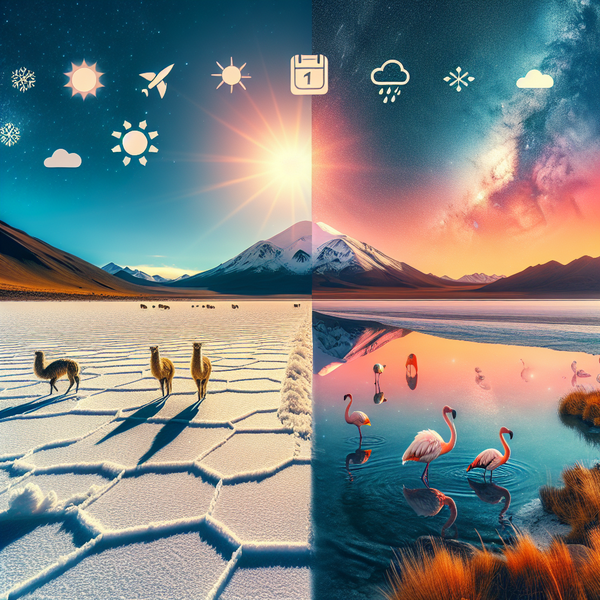
During the rainy season, the Altiplano undergoes a remarkable transformation. Moisture creates ethereal reflections across Uyuni’s endless salt flats, transforming them into natural mirrors that seem to touch the sky. While travel can be slightly more challenging, the visual rewards are unmatched.
Why Visit During the Rainy Season
- Incredible mirror effect on the Uyuni Salt Flats, creating surreal photography opportunities.
- Fewer tourists mean quieter sites and more authentic encounters.
- Rich birdlife including flamingos and migratory species attracted by coastal lagoons.
Do note that some routes may become inaccessible due to flooding, but local guides always know alternative paths. If you’re chasing the famous mirror images, this season will deliver unforgettable moments.
Best Time to Visit the Uyuni Salt Flats
No Bolivia Altiplano season guide would be complete without mentioning the iconic Salar de Uyuni. Its transformation between dry and wet seasons defines the experience entirely. In the dry months, the salt hexagons stand out clearly, offering uninterrupted 4×4 expeditions and starry night skies. In contrast, during the rains, reflections make it feel as though you’re walking on clouds.
Travelers often choose between these two wonders—clarity versus reflection. Both are spectacular, and your decision ultimately depends on which scenery you wish to capture.
Temperature and Weather Patterns in the Altiplano
Temperatures in Bolivia’s Altiplano can fluctuate dramatically within a single day. Mornings and evenings tend to be quite cold due to the altitude, while afternoons warm up quickly under intense sun. In general, daytime averages range around comfortable mid-levels, but nights can drop below freezing—especially in the dry period.
Tips to Handle Altiplano Conditions
- Pack layered clothing to adjust between day and night temperatures.
- Hydrate often to minimize altitude symptoms.
- Use sunscreen and lip balm—the UV index is high at this elevation.
Because of this weather dynamic, most travelers find mornings ideal for exploration, with afternoons reserved for relaxation or cultural experiences in local villages.
Festivals and Cultural Events by Season
The Altiplano’s unique heritage shines through in its seasonal celebrations. Visiting during festival times adds a lively cultural layer to your journey. Locals honor ancient Andean traditions alongside Catholic customs, often filling the streets with dance, costumes, and music.
Highlights to Experience
- Local festivities blending indigenous rituals with colonial influences.
- Colorful markets where artisans sell woven textiles and silver jewelry.
- Rituals for Pachamama (Mother Earth) celebrated widely during planting and harvest periods.
While exact dates vary annually, planning around key events can enrich your connection with Bolivian culture and its rich highland traditions.
Wildlife and Natural Wonders by Altiplano Season
The Altiplano is not only a scenic masterpiece but also a living ecosystem supporting species that thrive in extreme environments. Choosing when to visit Bolivia can determine which animals and landscapes you encounter. From flamingo-filled lagoons to snow-kissed peaks, each season offers something unique for nature enthusiasts.
What You’ll See
- Rainy season: flamingos breeding in shallow lagoons and lush altiplanic vegetation.
- Dry season: condors gliding over arid canyons and vicuñas grazing on golden plains.
- Year-round: Andean foxes, llamas, and alpacas dotting the horizon across vast terrains.
Whether you’re observing wildlife or capturing landscapes, the high plateau’s biodiversity and dramatic vistas promise unmatched photographic moments.
Altitude and Acclimatization Tips
Altitude plays a crucial role in how you experience the Bolivian Altiplano. Because major attractions like La Paz, Uyuni, and Potosí sit above 3,500 meters, it’s normal for travelers to feel the effects of thinner air at first. Adequate preparation will enhance your comfort and energy during your trip.
How to Adjust Smoothly
- Take it easy the first couple of days; avoid heavy exertion.
- Drink coca tea or chew coca leaves—traditional local remedies for altitude adjustment.
- Stay hydrated and consume light meals until your body adapts.
Altitude symptoms usually subside after a few days, allowing you to fully appreciate the unique landscapes and vibrant communities of Bolivia’s highlands.
Looking for effective travel marketing services? Get in touch.
Practical Tips for Planning Your Bolivia Altiplano Trip
Once you’ve chosen when to visit Bolivia, a bit of practical preparation ensures a seamless journey. From packing essentials to transportation decisions, everything matters at high altitude. The key is flexibility and respect for local conditions.
Before You Go
- Plan logistics early—remote areas have limited services and accommodations fill quickly in peak season.
- Carry cash for small towns; ATMs may be scarce in rural regions.
- Book guided tours with experienced operators for challenging terrains.
Whether you visit during the mirror phenomenon or under cloudless skies, Bolivia’s Altiplano will leave you with memories to last a lifetime. Its fusion of geography, culture, and mysticism offers something truly unparalleled in South America. Understanding the Altiplano’s seasons isn’t just about weather—it’s about aligning your soul with the rhythm of the Andes.